No Results Found
The page you requested could not be found. Try refining your search, or use the navigation above to locate the post.
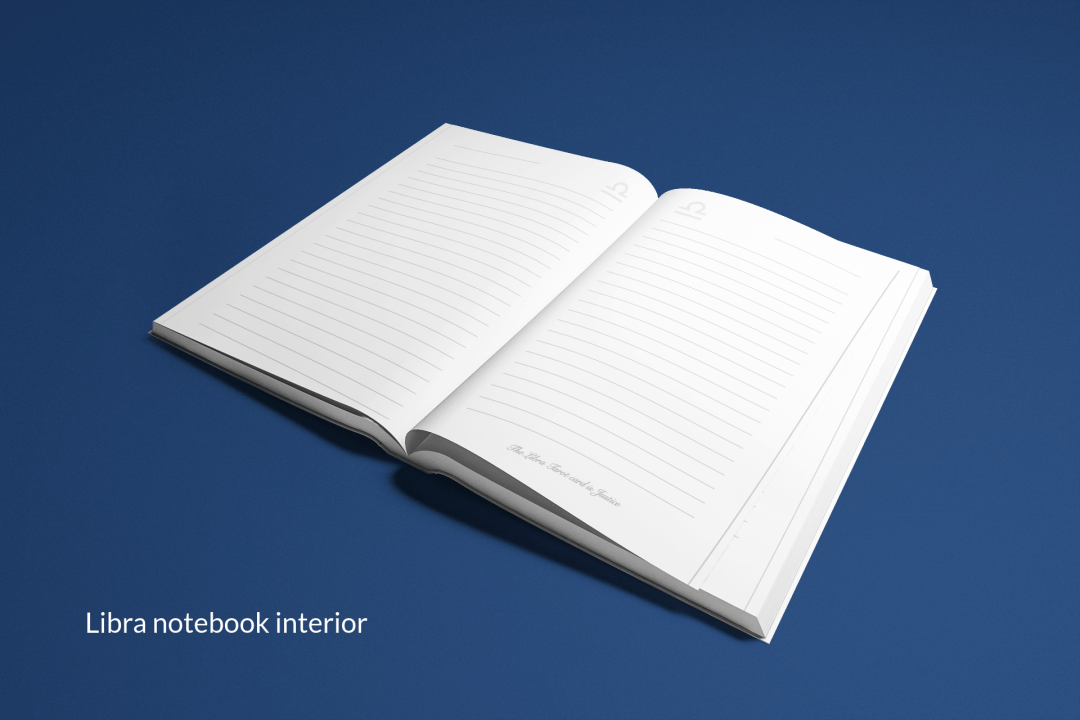
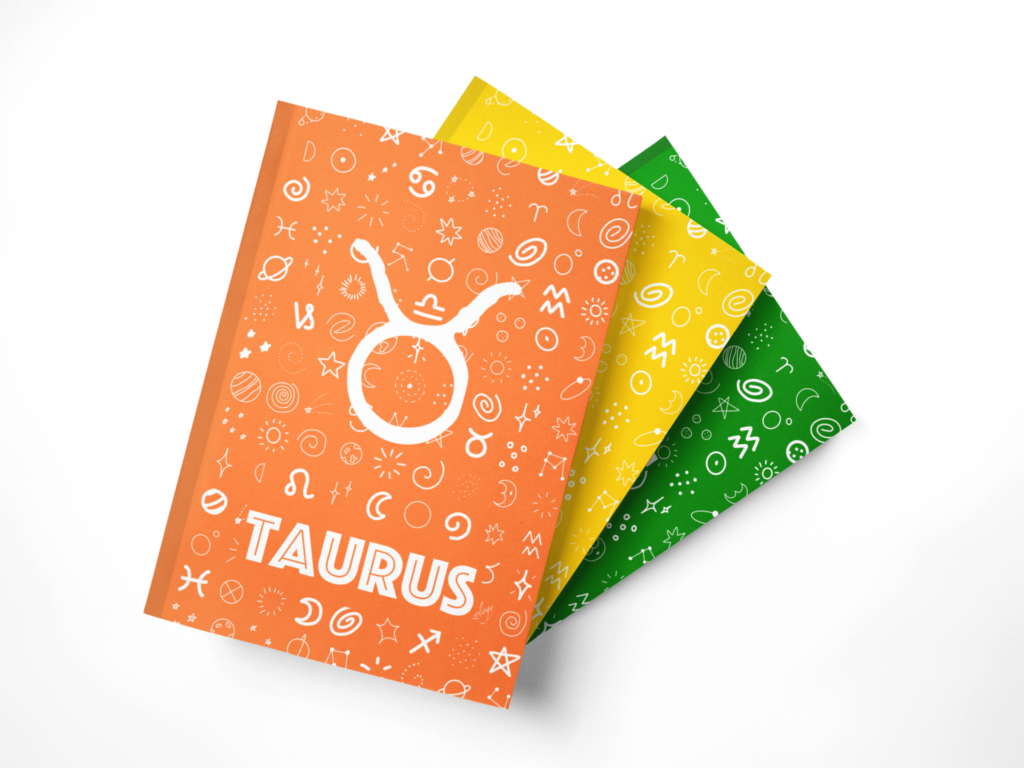
I am excited to share with your my latest venture in creating Zodiac Sign Notebooks. I loved designing these colorful notebooks.
Each one has what I call “light astrology” (so nothing highly technical and tricky as astrology can often get), which will appeal to the person in the street. Perfect for all who have a Sun Sign, oh right, that’s everyone in your life.
These handy ruled notebooks are specially written and designed by myself. They are themed and tailored to the individual zodiac sign.
Each Zodiac Sign Notebook focusses on one sign. There are twelve individual Zodiac Sign Notebooks in the whole collection.
Choose the book for your sign and the signs of your loved ones. When you reach for your Zodiac Sign Notebook, you are automatically learning more about your sign.
Newbies can trace the glyphs for their sign which are printed on every page. Aspiring astrologers will appreciate the snippets, at the bottom of every right-hand page, which contain interesting information about the specific sign.
If you are the star astrologer in your group (that’s the only person who knows the difference between a bull and a fish), consider your family, friends, and the people whom you love and stimulate their interest in astrology with the gift of a Zodiac Sign Notebook.
They will love you for it.
The goodness is in the giving. You will benefit as others begin to understand why you love astrology as well. People can get a glimpse into your world and the astrology that you love.
To order each book from Amazon, simply click on the image below.
The page you requested could not be found. Try refining your search, or use the navigation above to locate the post.
Author: Alison Price – Published: June 2021 – Revised: February 2024
The Lunar Nodes are points in a chart and they are an interesting part to the whole story when you read a chart. When I first started doing astrology I was not thrilled with lunar nodes as a concept as I was more interested in solar astrology being a Leo. Over time I learned to understand the Moon’s nodes better. It just goes to show that not everything in astrology is interesting to everyone. You need to find your focus as well.
The Sun’s path is called the plane of the ecliptic. The Moon’s path is angled at close to five degrees to the plane of the ecliptic. The Moon crosses the plane of the ecliptic twice a month, once traveling north and once going south.
The Moon’s north node is found at the point where the Moon crosses the ecliptic moving north (NN). The Moon’s south node is located at the point where the Moon crosses the Sun’s path moving south (SN).
When the Sun is near the conjunction to the nodes there is the chance of a solar eclipse or a lunar eclipse. This occurs roughly every six months as the Sun moves halfway around the zodiac and goes from one node to the other node.
In your chart, the Moon’s nodes are an axis with the north node at one end, and the south node at the other end. Some charts only show the north node and you can determine the South Node’s position as it is always directly opposite the north node.
The mean node is the average placement of the Moon’s nodes. The Moon’s mean nodes are always retrograde as they precess through the signs in longitude. The Moon’s true nodes can be direct, stationary or retrograde.
The Moon’s nodes precess (or move backward) at a rate of approximately 18.6 years through the whole zodiac. At age 19, 38, 56, and 75 when the nodes return to their birth position, you will experience a nodal return.
The lunar nodes spend around eighteen months in each sign.
All the planets (except the Sun) have north and south nodes. For example, Pluto’s nodes are at +/- 20 degrees Cancer and Capricorn. The planetary nodes are not exactly opposite each other in the chart.
The north node is also known as the dragon’s head or Caput Draconis. Connections to new people are shown through your north node. Meetings, get-togethers, and rendezvous are likely to happen. The north node is concerned with things that occur at a hub (computer routers, airports).
The north node shows your current incarnation in this life. It suggests your karmic objectives. The north node is related to consciousness. The north node indicates your future path and where you can grow and evolve.
The south node is also known as the dragon’s tail or Cauda Draconis. The south node suggests connections with people from your past. It indicates the things that you already know. The south node shows your past incarnations – past lives.
This point is related to unconsciousness and sub-consciousness. The south node clearly shows your past and your past lives. It is a place where stagnation can take place.
The north and south nodes are usually interpreted as an axis.
In your natal chart, the nodal positions are referred to as personal eclipse points as they show where the eclipses would have been that year.
The zodiac degree of the north and south nodes is known as your nodal degree, and any planet on that degree is vital in the nodal interpretation.
If a planet aspects one node it usually also aspects the other node, except for some of the trine/sextile combination as the sextile aspect orb is only 4°and the trine is 8° degrees.
Any planet conjunct a node will influence the nodal axis in a meaningful way. This planet suggests that you are being pulled forward in life (north node conjunction) or by being held back by your past (south node conjunction).
Planets square will aspect both the north and the south nodes in a square and will in a way stop either future or past dominating the life. This person may not move forward without significant challenges.
The north node in Aries fears but should push towards, independence.
The south node in Libra falls back to the partner to find balance.
The north node Taurus fears but should push towards, stability.
The south node in Scorpio falls back on reliability.
The north node in Gemini fears but should push towards communication.
The south node in Sagittarius falls back on adventure.
The north node in Cancer fears but should push towards self-reliance.
The south node in Capricorn falls back on the tried and tested.
The north node in Leo fears but should push towards creativity.
The south node in Aquarius falls back on being awkward.
The north node in Virgo fears but should push towards, kindness.
The south node in Pisces falls back on the sympathy of others.
The north node in Libra fears but should push towards, finding a partner.
The south node in Aries falls back on attacking others.
The north node in Scorpio fears but should push towards, transformation.
The south node in Taurus falls back on resisting change.
The north node in Sagittarius fears but should push towards, philosophy.
The south node in Gemini falls back on empty comments and gossip.
The north node in Capricorn fears, but should push towards, setting goals in life.
The south node in Cancer falls back on withdrawing to home.
The north node in Aquarius fears, but should push towards, being humble.
The south node in Leo falls back on arrogance.
The north node in Pisces fears, but should push towards, empathy and support.
The south node in Virgo falls back on criticism.
Pin this to read later
The north node in the first house is the quest to take a leadership role.
The south node seventh house is the quest to influence others.
The north node in the second house is the quest to establish personal security.
The south node in the eighth house is the quest to enable others financially.
The north node in the third house is the quest to know before speaking your mind.
The south node in the ninth house is the quest to realize that knowledge is already in you.
The north node in the fourth house is the quest for security in life.
The south node in the tenth house is the quest for a status-conscious family.
The north node in the fifth house is the quest to procreate and take risks in life.
The south node in the eleventh house is the quest to find allies.
The north node in the sixth house is the quest to have a satisfying work ethic.
The south node in the twelfth house is the quest to understand the meaning of life.
The north node in the seventh house is the quest for a partner.
The south node in the first house is the quest for self-happiness.
The north node in the eighth house is the quest for deeper understanding.
The south node in the second is the quest for self-respect.
The north node in the ninth house is the quest for knowledge. The south node in the third house is the quest for learning.
The north node in the tenth house is the quest to do well in life. The south node in the fourth house is the quest to be supported by your family.
The north node in the eleventh house is the quest to collaborate with others.
The south node in the fifth house is the quest to be sure about things.
The north node in the twelfth house is the quest for understanding.
The south node in the sixth house is the quest for daily work.
In your astrology journal and referring to your chart or the chart of a potential client do the following:
Pin this to read later
Here are some more posts about the Moon in astrology which you may enjoy.
Alison wants to help you uncover your individual creativity and lead a fulfilling life using your own astrology. She shares her wisdom from the heart with a touch of humor.
Learn more about Alison’s journey.
If you’d like to get in touch with Alison, you can reach out to her via email at starzology@gmail.com.
If you enjoyed this post, you may like some more astrology related articles from our blog.
Author: Alison Price - Published: November 2025 Forecasting Astrology This article is part of my Forecasting Astrology series, where I explore transits, solar returns, the graphic ephemeris, secondary progressions, solar arc directions and electional...
In astrology, the 1st HOUSE suggests is all about you as an individual it’s like your personal brand in astrology.
Author: Alison Price - Updated: January 2026 Chiron in Taurus Introduction Chiron Enters Taurus Chiron will be changing signs later this year. It will leave behind the cardinal fire sign, Aries, and enter the fixed earth sign of Taurus the Bull.Chiron's Sign...
Author: Alison Price – Published: May 2021 – Revised: March 2024
Let’s have a look at retrograde planets.
Retrograde motion is a phenomenon that occurs due to our vantage point here on Earth when we look at the planets in our Solar system.
When astrologers use the term retrograde, they are referring to apparent retrograde motion. Definition: To go or to seem to go backwards, to become worse or to decline.
In a chart a retrograde planet has the letters or symbol “Rx” next to their glyph and degrees. In some charts the planet and degrees are written in red to indicate the planet is retrograde.
A planet that is retrograde is seemingly moving backwards but it is that the Earth is moving forward swifter than the planet in question. There may be several retrograde planets in each chart or there may be no retrograde planets, it depends on the chart.
Retrograde motion affects all the planets with the exception of the Sun and Moon. The luminaries are always direct and never retrograde.
When a planet is retrograde it is closer to the Earth than at other times.
As an outer planet draws towards the opposition to the Sun, it becomes well placed for viewing through a telescope, as the full light of the Sun is on the planet.
In a birth chart, the station retrograde, and station direct points are marked with an “S” symbol for stationary.
Typically, planets are considered to be stationary when they are within an orb of 0°10’ of the station. The orb depends on the aspect set settings in your computer program.
The slower the planet, the longer it lingers in the orb of the station.
A retrograde planet in a natal chart is retracing its steps over the same degree and minutes of the zodiac as it passed before birth.
The planet would have crossed that spot in the zodiac previously (moving direct) and is now retrograding back over a previously passed area of the sign. It is going back over what has gone before and symbolically this imparts a reduced energy flow to the planet.
Retrograde motion is as if you are jogging down the road quite confidently, and then you realize you dropped your keys, so you stop and walk backwards looking for them, then pick them up and then once again start to jog forwards again. This shows that retrograde motion is much slower than direct motion.
The state of being retrograde appears to change a planet from its natural urges and direction and cause it to manifest effects similar to its opposite planetary pair attributes such as; Venus and Mars (female/male), and Jupiter and Saturn (expand/contract).
The sign in which the planet retrogrades needs to be considered. A planet may sometimes retrograde over one or two signs.
When a retrograde planet in a birth chart rules a sign, it takes momentum from that sign and makes it harder for that planet to rule the sign in a confident way.
Any planets in a sign ruled by a retrograde planet may show their own urges more so than the sign placement may indicate.
When a retrograde planet in a birth chart rules a house, the affairs of that house may initially be thwarted and held in abeyance until later in life when the retrograde planet stations direct by progression.
This is a joke so do not get caught. The Sun and Moon are never retrograde! To say someone has a retrograde Sun is an old astrology joke.
Normally a planet which is direct moves along at a regular pace. As planets approach their retrograde period their movement changes in the following way:
In each retrograde period a planet will make its two stations at particular degrees and minutes of the zodiac. Each retrograde period will cover a different part of the zodiac and will last for a varying amount of time.
The section of the zodiac where the planet will retrograde is known as the shadow period. The planet enters the pre-shadow or shadow, moving direct, before the actual retrograde period starts.
After the retrograde period at the point when the planet stations direct, the planet remains in the after-shadow or shadow, moving direct, until the planet passes the original station retrograde point again.
The pattern for the inferior planets when retrograde is specific. In the diagram the Sun is in the center. The orbit of either Mercury or Venus is shown in the next circle out. The Earth’s orbit is shown by the outer circle.
It is only as the inferior planets move into the most westerly and most easterly position that the retrograde cycle starts. Positions 1 and 3 show the station retrograde and the station direct respectively.
During a retrograde cycle there are three conjunctions to the Sun. The first direct pass, the retrograde conjunction, and the final direct conjunction with the Sun.
The time in days for the retrograde period depends on the positions of the inferior planets and the earth and how far each body is from the Sun. This is why each retrograde period may be slightly longer or shorter than the previous one.
Mercury is probably the most well-known retrograde planet where it is even common knowledge outside astrological circles. Mercury is usually retrograde for three weeks and about three times a year or every four months. In any one year Mercury will typically retrograde in the same elementthen the retrograde period shifts into another element.
Mercury rules the nervous system delivering messages to and from the brain.
Venus is retrograde about every eighteen months for about forty days (six weeks). Venus’s retrograde motion begins when she is one sign ahead of the Sun, and direct motion resumes when she is one sign behind the Sun. Venus rules the feminine principle and is a receiver of both material goods and love.
The superior planets have their obits outside that of the Earth’s. They are the planets from Mars to Pluto. The superior planets are retrograde every year except Mars, which is on an almost two year retrograde cycle.
The superior planets begin their retrograde periods when they are near the trine to the Sun. Whilst the Sun travels the four months (i.e. one third of the chart) towards the next trine, the superior planets are retrograde. Around the point when the Sun passes the perfect to the trine to a superior planet, the superior planet again begins direct motion. When a superior planet is in opposition to the Sun it is always retrograde.
Mars is retrograde every twenty-two months for about eleven weeks. This means it is retrograde about every second year.
Suggests a hesitancy in assertive matters. The individual is likely to retain anger inside.
Jupiter is retrograde for around four months and direct for around nine months every year.
Saturn is retrograde for about four and a half months each year.
Uranus is retrograde for about five months each year.
Neptune is retrograde about six months every year.
Pluto is retrograde for about six months each year.
In your astrology journal please do the following:
Referring to your chart, please do the following:
Pin this to read later
Alison wants to help you uncover your individual creativity and lead a fulfilling life using your own astrology. She shares her wisdom from the heart with a touch of humor.
Learn more about Alison’s journey.
If you’d like to get in touch with Alison, you can reach out to her via email at starzology@gmail.com.
If you enjoyed this post, you may like some more astrology related articles from our blog.
Author: Alison Price - Published: November 2025 Forecasting Astrology This article is part of my Forecasting Astrology series, where I explore transits, solar returns, the graphic ephemeris, secondary progressions, solar arc directions and electional...
In astrology, the 5th HOUSE suggests your creative side. It rules recreation and procreation as well as gambling and the stock exchange.
The page you requested could not be found. Try refining your search, or use the navigation above to locate the post.
Author: Alison Price – Updated: January 2026
This article is part of my Basic Natal Astrology category and brings all the beginner components of interpreting a natal chart together. This includes signs, planets, houses, aspects and more. Alison
Houses pertain to different areas of life. They are like the backdrop or stage of a play. There are twelve houses in every chart. The houses are numbered from one to twelve anti-clockwise starting from below the ascendant.
Houses can be any width; some are as small as twenty degrees wide and some are as large as forty-five degrees wide. It all depends on the house system being used and the place of birth for which the chart is set.
All the charts on this website use the Placidus house system. It is recommended that you stay with one house system (these days most astrologers use the Placidus house system mainly because there have been Placidean Tables of houses available for years, which may not be the ideal, but it is the reality).
For the first year of your astrology study or until you can make an educated decision by exploring other house systems to decide which one you may feel resonates better with your own chart. Other house systems in common use are Equal house, Koch, Morinus, Porphry and Regiomantanus.
House cusps are measured in degrees and minutes and are the dividing line between two houses. The house flows anti-clockwise and ends at the next house cusp. A house has a cusp at both sides, but the anti-clockwise cusp is the one that pertains to the house. A planet is in one house or another it is never in both although it can be very close to a cusp (within one degree).
House cusps are derived from the birth time. It follows that a correct birth time is required for exact house cusps. If you do not have a firm birth time, then the houses cannot be used.
Every house has a ruler. The ruler of a house is the planet which rules of the sign found on the house cusp. For example: The ascendant sign’s planetary ruler is the ruler of the first house. This is a special case as the ruler of the ascendant is also the chart ruler.
The Sun and the Moon usually rule one house as the rulers of Leo and Cancer. Mercury and Venus usually rule two houses each Gemini and Virgo for Mercury and Taurus and Libra for Venus. Mars, Jupiter and Saturn usually each rule one house and co-rule another (traditional) house.
Mars rules Aries and co-rules Scorpio, Jupiter rules Sagittarius and co-rules Pisces and Saturn rules Capricorn and co-rules Aquarius. Uranus, Neptune and Pluto usually co-rule one house each. Uranus rules Aquarius, Neptune rules Pisces and Pluto rules Scorpio. Chiron does not rule a house because it does not rule any sign.
If a house is thin (less than thirty degrees wide) then one planet may rule two consecutive houses as the same sign may be on both adjacent house cusps. A house ruler (by its sign, house and aspects) imparts its energies onto the affairs of the house.
If a house is very wide (more than thirty degrees) there is the possibility that one sign is on the house cusp, the next sign is fully within the house and the third sign is on the following house cusp. The middle sign does not have a house cusp. This is known as an intercepted sign.
If the intercepted sign is Cancer or Leo it means that one of the luminaries does not have a house to rule. Intercepted signs are always in pairs and are found opposite each other.
The planetary ruler of the intercepted sign is a moot point for that house’s interpretation. It is as though it has no voice in the chart. That planet does not have as much weight.
There are three types of house; angular, succedent and cadent.
The succedent houses are the 2nd house, 5th house, 8th house, and 11th house. They fall behind the angular houses. They are also known as support houses as they support the angular house next to them, usually financially. Planets in succedent houses are paused, on hold and are pending.
The cadent houses are the 3rd house, 6th house, 9th house and 12th house. They fall behind the succedent houses. Planets in cadent houses are passive, retiring and are mute.
Here are a few more articles about the astrological houses.
Referring to your chart and in your astrology journal please do the following:
Alison helps you uncover your individual creativity and lead a fulfilling life using your own astrology. She shares her wisdom from the heart with a touch of humor. She offers Consultations for everyone and Coaching for Aspiring Astrologers.
If you’d like to get in touch with Alison, you can reach out to her via email at starzology@gmail.com.
If you enjoyed this post, you may like some more astrology related articles from our blog.
The page you requested could not be found. Try refining your search, or use the navigation above to locate the post.
There are three modes (modality, quadruplicities or qualities). The three modes are cardinal, fixed, and mutable. Each sign has one mode. Every mode has four signs associated with it.
The four Cardinal signs are Aries, Cancer, Libra and Capricorn.
The four Fixed signs are Taurus, Leo, Scorpio and Aquarius.
The four Mutable signs are Gemini, Virgo, Sagittarius and Pisces.
The modes are balanced when they are spread evenly (as much as you can evenly spread seven into three).
For example, three planets in cardinal signs, two in fixed signs and two in mutable signs are considered in balance.
A mode is considered strong when there are at least two more planets in the mode than the next best mode.
For example, four planets in cardinal signs, two in air and one in a mutable sign makes the cardinal mode strong.
A mode is weak when there are no planets in the mode.
For example, three planets in cardinal, four in fixed and no planets in a mutable sign makes the mutable mode weak.
People with many planets in the cardinal signs usually start things. They are self-motivated, have goals and are the leaders of the zodiac.
Cardinal signs initiate change.
A lack of planets in the cardinal signs suggests the individual is not one for starting things or getting things going. For a weak cardinal person procrastination may be an issue.
Those with many planets in fixed signs stick to things and can complete things. They are tenacious, reliable, stubborn and steadfast. They are resistant to change to the extent that they may have to overcome inertia.
A shortage of fixed planets in the signs indicates the person has a certain wavering in life.
Strong mutable signs are flexible, adaptable and inclusive. They are accommodating, adjustable, amenable to change and they can move things along.
When there are no planets in a mutable sign it imparts some rigidity to the individual.
In your astrology journal, and only counting the seven visible planets from the Sun to Saturn, do the following:
Alison helps you uncover your individual creativity and lead a fulfilling life using your own astrology. She shares her wisdom from the heart with a touch of humor. She offers Consultations for everyone and Coaching for Aspiring Astrologers.
If you’d like to get in touch with Alison, you can reach out to her via email at starzology@gmail.com.
If you enjoyed this post, you may like some more astrology related articles from our blog.
The page you requested could not be found. Try refining your search, or use the navigation above to locate the post.
Arwynne O’neill and Katia take a lighthearted look at what kinds of vacations and travel experiences appeal to each of the 12 signs.
Discover how different Chart Rulers can impact the whole chart. Get tips for each Ascendant sign and their planetary rulers.
Author: Alison Price – Updated: October 2025
There are four elements or triplicities in astrology; fire, earth, air, and water.
Each sign is attributed to one element.
Every element has three signs.
The elements show how we experience and process the world around us.
Only count the seven visible planets which are, the Sun, Moon, Mercury, Venus, Mars, Jupiter and Saturn.
Your total will add up to seven.
The reason for this limited count is that you want a quality count and not a quantity count.
The visible planets have been in human consciousness since man (and woman) evolved.
We are fully aware of them.
Whereas the other planets are relatively new.
The elements are considered to be in balance when the planets are equally spread amongst them.
For example, one planet in a fire sign, two in earth signs, two in air signs and two in water signs shows the elements are in balance.
An element with two planets more than the next best element is considered strong.
For example, four planets in fire signs and two in earth signs, zero in an air sign and one in a water sign will give a fire emphasis as there are two planets more in fire than in earth.
Strong fire people will make things happen by creating a spark.
They use their intuition to make decisions.
Generally, fire people are optimistic, enthusiastic, inspirational, faithful, stimulating and positive.
A lack of planets in fire indicates that inspiration and visualization may be in short supply.
Strong earthy folk will bring things into reality and give them form.
They use sensations (touch, smell and taste) to make decisions. They are practical, realistic, useful, and can be slow moving.
A shortage of planets in earth suggests the person is not well-grounded and may have an airy-fairy approach to life.
Strong air individuals determine what things are, label them and then they inform others.
They use their thoughts and minds to process information, knowledge, ideas and concepts to make decisions.
They are often intellectual, good communicators, thoughtful, objective, positive, theoretical and they can deal in abstractions.
No planets in the element of air hints at an inability to think things through and to find a conclusion.
Strong water souls experience feelings about things and they may give them care.
They use their feelings to accept or reject things depending on their likes and dislikes to make decisions.
Generally, they are sensitive, aware of atmospheres, introverted, impressionable and flexible.
When the water element is without planets, it implies an inability to understand emotions and what things and situations upset themselves and others.
In your astrology journal, and only counting the seven visible planets from the Sun to Saturn, do the following:
Alison helps you uncover your individual creativity and lead a fulfilling life using your own astrology. She shares her wisdom from the heart with a touch of humor. She offers Consultations for everyone and Coaching for Aspiring Astrologers.
If you’d like to get in touch with Alison, you can reach out to her via email at starzology@gmail.com.
If you enjoyed this post, you may like some more astrology related articles from our blog.
In astrology, the TENTH HOUSE including the Midheaven indicate your career and public life. Planets here modify this area of your life.
In astrology, the 5th HOUSE suggests your creative side. It rules recreation and procreation as well as gambling and the stock exchange.
Pure Astrology Reading Cards Learning Cards As an Aspiring Astrologer it is a good idea to have some astrology reading cards to round out your readings with your clients. These cards are from Pure Astrology and can help you to not only learn astrology but to add a...