No Results Found
The page you requested could not be found. Try refining your search, or use the navigation above to locate the post.



Author: Alison Price – Updated: September 2026
In this article I’m sharing with you the roadmap I used and how I got to be such a fan of cards in general and astrology cards in particular. This is a part of my Wellbeing category and has ideas of a creative nature.
Recently I have been creating cards for many things in my life.
I’ll be explaining more below, but the point is that the handmade cards which I have crafted are such a mainstay in my life now.
I always seem to have some cards on the go and often I’m working on multiple decks at the same time.
Here is the diagram of my cards experience roadmap and clearly this was draw in retrospect.
In the beginning I had no idea that cards would become such a feature in my life and the best way for me to do daily art as a creative outlet.
So, thinking back I drew this handy dandy road with the cards that came into my life dotted along the way.
I suppose it’s not really a roadmap, but more of a timeline of how I had the cards and when they rose to awareness for me.
My card journey began way back in 1980 and the path I took shows the different cards along the road.
Let’s still call it a roadmap even though it is a timeline.
Maybe it’s both?

Listen to our latest Astro Art Card podcast episode on the Starzology Astrology Podcast.
When I started to learn astrology and took my first astrology lesson it was back in 1980. Yes, I’ve been doing astrology that long.
I bought the Rider Waite Tarot deck from Aquarian Books in Hillbrow in Johannesburg.
If you know that shop then you know.
In the Tarot deck you can choose to be one of the cards yourself and I consider myself to be the Queen of Wands card.
Who do you see yourself as?
Several years ago, I got myself a copy of the Mandala Astrological Tarot by the astrologer Tad Mann.
These cards are square and so can be read by laying them in a circle just like a chart.
He painted each card’s design himself is bright cheerful colors and I really like these ones.
I think they reflect my Leo energy very well.
The Mandala Astrological Tarot by A.T. Mann.

During my early marriage we played bridge.
It was a card game that I’d never heard of until we joined a bridge club in Johannesburg.
We played for about five years twice a week and it became intense.
When I met Arwynne in 2012 and we started the first podcast venture to gether she introduced me to her handmade reading cards.
She made them in Photoshop, collaged the backgrounds, then had them printed to finally laminated them.
She was the inspiration for me to create my own cards sometime in the future.
I thought that it was so cool what she had made and realized that I too could make something for myself.
That just because the big boys, Rider Waite, had made the final word in Tarot cards, I realized that they actually were not the final word.
It dawned on me that anyone who is interested can create their Tarot art, in their own style and with their own interpretation.
Mind blown.
Around 2016 I purchased The Astrology Reading Cards by Alison Chester Lambert and Richard Crooks.
These are a delightful set of signs, planets and houses cards.
They are beautifully and richly illustrated and I loved them as my go-to cards for a long time.
They can be used in an astrology reading as an ice-breaker with new clients.
I did reach out to Alison, great name by the way, and asked her about becoming an affiliate for the cards.
She told me that her only involvement in the process was writing the astrology for a one-off payment, and that the publishers had the rights and I should contact them.

The Pure Astrology Cards from two Canadian sisters Dana and Barbara.
It is another set of astrology cards which include the signs, planets, houses and aspects.
They also include the modes cardinal, fixed and mutable.
You can check out my video below about how to use them as I do.

During 2022, I began making some Artist Trading Cards (ATCs).
I decided to call them Astrology Trading Cards (ATCs).
You can read more about these cards which I made here.
The ATC size is specified at 2.5″ x 3.5″ or the same size as a regular playing card.
Later that year I bought some gratitude cards for inner reflection.
I enjoyed just how these cards always had a positive message.
Whereas the Tarot has some disturbing cards like Death and the Hanged Man which are cards that I always felt popped up far too often.
Later I had an astrology student who came to me for personal classes.
She had a Greek boyfriend and one summer she went to Greece for a vacation.
Upon her return she gifted me some very attractive Greek Myth playing cards.
Fun, fun, fun!


Next, I moved on to cutting out my larger Astrology Cards to the same size as the Gratitude cards deck and Alison’s cards.
I felt this was the right size.
By cutting my own cards form Bristol board, I felt I was truly immersed in the process.
The creative nature of making your own cards is very therapeutic.
It was at this time that I discovered neurographic art and how sketching can help to support your mental health by reducing stress and anxiety.
I recommend the book DOSE by Tj Powers for more information on how the brain chemicals can be supported by what you spend your time doing.

I discovered Plant Knowledge Cards. I have linked a similar deck below.
These I just liked when I saw them at the Vancouver Art Gallery gift shop.
In my mind I thought that if one day I was fortunate enough to have some grandchildren, I’d be able to teach them about the trees in our local area here in Vancouver.
Let’s face it, we could all do with knowing more about trees…

I found the artist Ten Hundred on YouTube whose art style speaks to me and I have supported him on Patreon.
One year he created 52 playing cards in his own unique style called Vivid Kingdoms.
I bought his deck of cards which I haven’t opened yet.

Next, I ventured into my Artspiration Deck.
This was a deck of cards, the size was still 97mm x 140mm, with mainly New Age symbols like the Eye of Horus and the Hand of Fatima.
These I did for a while but I only made about thirteen cards in the set.
I’ll circle back around to these a bit later.
As my family grew, I was pleased to welcome my new son-in-law who speaks Arabic at home.
He says he will teach his kids Arabic as they will learn English naturally in their environment.
Thinking back to the potential for grandchildren I decided to start to learn Arabic.
It is good for my Mercury mind to keep learning and a language truly stretches you.
If you feel like you need a mind s-t-r-e-t-c-h then go and learn another language.

For Christmas last year I did not want to just get my daughters more junk.
You know what I mean, another coffee machine, an electric carving knife, an ornament of a frog etc.
Junk.
So, as I was in “Card Making Mode,” it occurred to me that I could make them some family-themed cards to slip into their Christmas Card envelope.
This would mean that I was not just wasting money on clutter that they don’t even want and it would be a creative artwork from Mom.
Win, win.
I decided to make them each five core cards that they all got the same and then two individual cards which relate directly to their lives and what they get up to.
The five core cards were love, money, wellbeing, vision and creativity.
The individual cards were:
I had a vision of making more cards, like a granny card for my mother, for them for their birthday, other special days and next Christmas to grow their personal deck.
I also thought they could make cards for each other; well, you can hope.


I wanted a name for this family deck that would grow over time.
I hummed and hawed for quite a while.
I thought back to when my dad started his business and named it after us kids.
He called his company Alsada Engineering from the first two letters of mine and my sibling’s names, Alison, Sarah and David.
Thinking about this I tried some combination of my daughter’s names Emma, Julia and Claire.
Then I came up with a blended combination of their names as Emjulaire.
So not the first two letters but a syllable from each child’s name.
This I liked and I put the deck name, Emjulaire, at the bottom of every card just like the Pokémon people do.

A brilliant Scottish artist is Johanna Basford.
She creates wonderful and whimsical coloring books for children and adults.
This year she launched a set of cards called Notes from Nature.
Obviously, I had to have them.
I’d never had one of her coloring books, as that is not really my thing, but when she launched cards, well, say no more, they just had my name on them.
And by the way she has a new set of cards coming during Autumn 2026 and I’ll link to that here when they come out.
It was at this point that I finally plumped on my card sizes.
Up until now I’d been cutting my cards to 97mm x 140mm with 7mm corners, but then I noticed that Johanna’s cards were published to a slightly different size.
Her cards are 100mm x 150mm with 5mm corners.
Very metric which I can do as that is the measuring system which I was brought up with.
This size also relates to 4″ x 6″ in imperial measurements give or take a whisker..
4″ x 6″ is the size of a standard photograph, a basic envelope and even the Canon Selphy printer )on my wish list) prints photos to 4″ x 6″.
Finally, I had a great size for my cards for the future.
One that works so well in metric and imperial.
Yaay.

This year I decided to refresh my old Artspirations Cards into my new shiny Signs and Symbols Cards.
I see these as cards as starter cards for anyone interested in symbology.
They are not strictly astrology cards and that I why I write about them and explore them further on my lifestyle blog Heathcote Living.
They are now in the new size and I’m slowly working on them.
It really is a labor of love.
This summer I launched the initiative of an in-person ATC club in downtown Vancouver, Canada.
I see this as a way to connect with others in the astrology space without it becoming a boring old astrology lecture session.
The idea is that every season, so winter, spring, summer and autumn, we get together to create and color some astro art cards to trade or swop just for fun.
If this interests you then there is more information here.
Back in the day I hosted an art evening with a few ladies and you can see more about that in this video.
I have a plan for some more card decks in the future.
It may be next year or the next five years but there are other card collections that I’m toying with the ideas for.
I’d love to do a crystals deck with emerald, amethyst and citrine etc.
I’d love to draw each crystal and have their meaning on them.
Watch this video on crystal and astrology for some ideas on what I’m thinking about.
I also did a crystal swatch for my colored inks.
I’m interested in women artist in history and those still creating currently.
Women like Frida Kahlo and Emily Carr spring to mind.
I envision me painting a portrait of each woman as a card in itself with information on their art style, movements and mediums.
Supporting female artists.
I do have an interest in butterflies and how they are such beautiful insects.
You can see more about my butterflies here.
Delicate and transient butterflies are all gorgeous.


On another note, I have a passing interest in the female saints in the Bible.
Maybe even the women of the Bible.
Ther are over 1500 men mentioned in the Bible and only about 150 women, so I’ll have to sift through this list to find the ones that speak to me.
This card deck I’m still pondering.
I create cards because it’s a way to do a daily art practice without having a massive blank canvas staring at me.
Cards are affordable as an art form and so easy to get going with.
One card can be completed in a day.
If I mess up a single card I can simply chuck it away and start again.
If you want to learn astrology, I urge you to create a few cards.
They can support your astrology journal entries as well.
Begin with your Sun sign and your ruling planet and go from there.
Astrology cards, or other cards, can support your personal astrology curriculum.
Your personal curriculum is the learning you have set out for yourself each season in which to learn something new.
For me, my personal curriculum contains my Arabic language along with other things including astrology.
Your personal curriculum is a way to take control of your education and halt all the doomscrolling.
Because astro art is so much of what I do and live for, I’ve created a few goodies, events and initiatives for you to join in and with which to get engaged.
Get your printable Starzology Astro Art Cards PDF which includes all the glyphs and symbols used in astrology.
This is all designed and written by me, Alison.
I have covered the signs, planets, houses, aspects and points.
This is a paid item which you receive a PDF file to print out in your own home.
You can print as many or as few as you like.
You can use it for your own pleasure or create your own group meeting to work through each component individually.
Who is this for?
Good for people who live in places far from the big city’s or those who have no local astrology group with which to engage like these special villages and small towns:
Of course, if you are a city slicker, just like me, then this printable too will interest you and be a gateway to get started with self-learning astrology art cards.
If you want to get back to analogue information then you may be interested in my mail club.
The Starz Post is my astro themed mail club where I send you astrology related papercraft goodies in an envelope every month.

If you live in Vancouver then here is just the get together for you.
My seasonal Astro Trading Card club meets once each season, winter, spring, summer and autumn, in downtown Vancouver.
Find out more about the Starzology Astro Art Trading Club


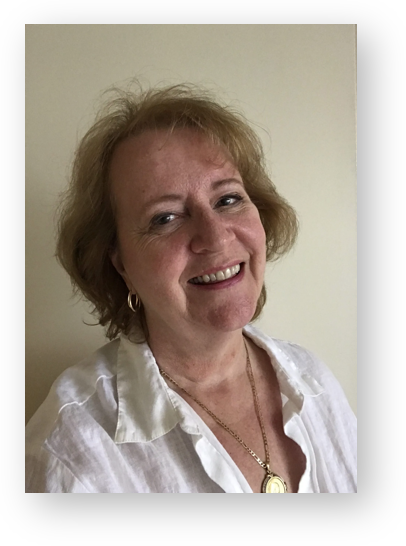
Alison helps you uncover your individual creativity and lead a fulfilling life using your own astrology. She shares her wisdom from the heart with a touch of humor. She offers Consultations for everyone and Coaching for Aspiring Astrologers.
If you’d like to get in touch with Alison, you can reach out to her via email at starzology@gmail.com.
If you enjoyed this post, you may like some more astrology related articles from our blog.
The page you requested could not be found. Try refining your search, or use the navigation above to locate the post.

In astrology, explore the 8-cycle pattern of VENUS in your SOLAR RETURN chart and the background pattern of Venus’ placements in your life.

Author: Alison Price - Published: July 2025 Your Money Planets Introduction There is not one method for financial freedom that works for everyone. Some people benefit from going cold turkey and cutting up their credit cards but that only works for a few. Others...

In astrology, URANUS moves into GEMINI in 2025, kicking off a seven-year cycle focused on innovation, fresh ideas, and bold new ways of thinking.


Author: Alison Price – Updated: August 2026
A personal curriculum is simply your own plan for learning.
Instead of following a set course designed by someone else, you choose the subjects, topics and skills you want to explore based on your interests and experience.
You decide what you want to learn, how deeply you want to go and how you want to learn it.
Your curriculum can be as structured or as flexible as you like, and it can change as your interests change.
In astrology, this means you can create a year of study that is completely your own, combining chart practice, books, research, creativity and anything else that helps you understand astrology more deeply.
The word curriculum comes from the Latin currere, meaning “to run” or “to move along a course”, and originally referred to a course or path of study.
I have design free Personal Astrology Curriculum template which you can download as a PDF and use to get yourself started with this fascinating topic and support your astrology learning.
Click the link below to get your download.
You don’t need to enroll in another formal astrology course to deepen your knowledge.
At this stage of life, learning can be driven by curiosity, meaning and personal relevance rather than qualifications or certificates.
You can choose the subjects that genuinely interest you, decide how deeply you want to explore them and create a rhythm of learning that fits comfortably into your life.
Think of it as creating your own personal astrology curriculum.
Your personal curriculum gives you the agency to decide what you want to learn, how you want to learn it and whereyou want your curiosity to take you, rather than simply following a path designed by someone else.
Perhaps there are areas of astrology you’ve always wanted to explore but never had the time.
Perhaps you’ve studied astrology for years and now want to revisit the basics from a different perspective.
Or perhaps your interests have changed and you find yourself drawn towards subjects that would not have interested you when you first discovered astrology.
There is no prescribed path and no graduation date.
Your curriculum can be shaped around your experience, your curiosity and the questions that matter to you now.
So, instead of asking, “What astrology course should I take next?” try asking:
“What do I want to know about astrology now?”

The 1st house represents the self, individuality and the way we choose to move through life.
Creating your own curriculum has a strong 1st-house quality because you are taking personal responsibility for your learning and deciding what feels right for you.
You are not simply following someone else’s path.
You are choosing your own direction.
The 3rd house is associated with learning, reading, writing, gathering information and developing knowledge through curiosity and experience.
A personal curriculum has a strong 3rd-house connection because you are choosing the subjects you want to explore and following your own questions wherever they lead.
The 9th house takes learning to a broader and deeper level.
It is associated with higher education, philosophy, belief systems, wisdom and the search for meaning.
Your personal curriculum can have a 9th-house quality when you move beyond simply collecting information and begin to develop your own understanding, perspective and philosophy of astrology.
The 1st house says I choose my path, the 3rd house says I am curious and I want to learn and the 9th house says I want to understand what it all means.
Before deciding what to study, take a moment to think about why astrology is calling you now.
Your reasons for studying astrology may have changed over the years.
Perhaps you first discovered it because you wanted to understand yourself or your relationships.
Now you may be more interested in the bigger picture, exploring life transitions, creativity, purpose or the stories that unfold through a birth chart.
There is no right reason to study astrology.
Your curriculum can be built around whatever genuinely interests you.
You might want to:
You don’t have to turn your interest into a business or become an expert.
You can study astrology simply because you love it.
If you could become really good at one aspect of astrology over the next year, what would it be?
Let that answer be your starting point.
Before choosing what you want to learn next, take a moment to appreciate what you already know.
If you’ve been studying astrology for a while, you probably know far more than you realize.
Some subjects may feel very comfortable while others have become a little rusty.
There may also be topics you’ve been meaning to explore for years but somehow never got around to.
Make a simple inventory of your current astrology knowledge.
You might include:
Now sort these subjects into four simple groups.
These are the areas you feel comfortable with and could explain to someone else.
You have a foundation but would enjoy becoming more confident.
Perhaps you’ve studied it before but could use a refresher.
These are the subjects that keep catching your attention.
Don’t think of this as a test.
There are no marks and nothing to pass or fail.
It is simply a way of seeing where you are now so you can make thoughtful choices about where you want to go next.
Which area of astrology do you already know quite well but would now like to understand at a deeper level?

Your personal astrology curriculum doesn’t have to look like anyone else’s.
Once you know what you already understand and what you’d like to explore, think about the direction you want your studies to take.
You may find yourself naturally drawn towards one particular path, or you may want to combine several.
Here are some possibilities:

Focus on becoming more confident at interpreting natal charts.
You might spend your time practicing chart synthesis, working with different chart patterns and learning to see how the individual pieces fit together.

Concentrate on timing and prediction.
Explore transits, progressions, returns and other techniques that help you understand how astrology unfolds through time.

Choose one subject that fascinates you and explore it deeply.
Keep notes, collect charts, look for patterns and develop your own ideas.

Explore how astrology has developed over the centuries.
You might study different traditions, historical astrologers and the changing ways astrologers have interpreted the heavens.

Explore the stories and symbols behind astrology.
You could study planetary mythology, signs, asteroids, archetypes and the symbols that give astrology its richness.

Use writing as a way to deepen your understanding.
Articles, newsletters, books or a blog can all become part of your learning process.

Study subjects deeply enough that you can explain them clearly to someone else.
Teaching is a wonderful way to discover what you really understand and where you still have questions.

Explore astrology through the lens of lived experience.
You might be drawn to life transitions, ageing, identity, purpose, relationships, creativity or legacy.
You don’t have to choose just one.
Your path can wander and change as your interests develop.
Which of these paths feels most exciting to you right now?
And perhaps more importantly:
What would you love to spend a whole year exploring if you didn’t have to worry about whether it was practical or useful?
Now you can start putting the pieces together.
Choose perhaps five to seven subjects that will form the backbone of your astrology year.
These don’t need to be completely new subjects.
You might include areas you already know but want to explore more deeply alongside subjects you’ve never studied before.
For example, your curriculum might include:
Think of these as broad areas of interest rather than subjects you have to complete.
You might spend several months on one topic while another takes only a few weeks.
You may discover something along the way that completely changes your plans.
That’s fine.
The aim is to create enough structure to keep you moving forward without turning your astrology studies into another obligation.
Your curriculum should be challenging enough to keep you interested but flexible enough to fit into your life.
If you could choose only five astrology subjects to explore over the coming year, what would make your list?
Add a Personal Concentration
Now for the part that can make your curriculum truly your own.
Choose one subject that fascinates you enough to explore deeply.
It might be something you’ve been curious about for years or a topic you’ve only recently discovered.
This doesn’t have to be the most practical choice.
In fact, it can be much more interesting if you choose something simply because you can’t stop thinking about it.
You might explore:
You could spend an entire year exploring one subject.
Read about it. Collect charts. Keep notes. Look for patterns. Write about your discoveries. Make drawings or create your own visual resources. Let your curiosity lead you.
This is where your years of life experience can become part of your astrology education.
You may notice connections that wouldn’t have been meaningful to you twenty or thirty years ago.
And remember, you don’t have to prove anything.
You are allowed to study a subject simply because it fascinates you.
What subject in astrology could you happily spend a year exploring just because you want to know more about it?
Once you’ve chosen what you want to explore, think about how you enjoy learning.
Learning astrology doesn’t have to mean enrolling in a course, sitting an exam or working your way through a textbook from beginning to end.
Your personal curriculum can include whatever combination of learning methods suits you.
You might:
You may also discover that you learn best by combining several approaches.
Read a chapter, listen to a podcast about the same subject, look at some charts and then write down what you’ve discovered.
There is no single best way to learn astrology.
Perhaps you are a reader.
Perhaps you learn through conversation.
Perhaps you need to see a chart in front of you before an idea really clicks.
Or perhaps your understanding comes alive when you start explaining the subject to someone else.
Your curriculum should work with the way your mind works, not against it.
When have you learned something in astrology that really stayed with you, and what helped you understand it?
Astrology comes alive when you move from theory to actual charts.
You can read all the books you like about a planet, sign or technique, but eventually you need to see astrology at work in real people’s lives.
This is where your learning becomes much more personal and, often, much more interesting.
Create a core collection of charts to study.
You might include:
People who experienced remarkable life events.
You don’t need to know everything about a chart before you begin.
Choose one question or technique and explore it.
Look at the chart.
Make some observations.
Then compare what you see with what you know about the person’s life.
For each chart, ask yourself:
Keep your observations in your astrology journal.
Over time, you’ll build up your own collection of chart studies and begin to notice patterns that you may not have encountered in a textbook.
And don’t be afraid to be wrong.
Sometimes the most valuable chart studies are the ones where your first interpretation doesn’t quite work.
That’s when you start asking better questions.
Whose birth chart would you love to spend some time exploring, and what would you like to discover about it?

Books can be wonderful companions on an astrology journey, but your reading list shouldn’t become a source of pressure.
Instead of creating one enormous list of everything you think you ought to read, try dividing your books into three simple categories.
Books that feel particularly important to your current studies.
These are the ones you genuinely want to spend time with.
Books that catch your interest and that you’d like to explore when you have the time.
Books that sound fascinating but don’t need your attention right now.
You might also keep a running list of books that other astrologers recommend.
Don’t feel that you have to read every book that crosses your path.
Your goal isn’t to become the person who has read the most astrology books.
Sometimes one book that you read slowly, return to several times and discuss with others can teach you more than ten books you rush through.
And remember that reading is only one part of your astrology education. A book becomes much more valuable when you take an idea from its pages and test it against a chart.
Here is my list of astrology books that you can start with.
What is one astrology book you’ve been meaning to read for a long time, and what is stopping you from picking it up now?
Your astrology curriculum needs to fit around the life you actually have.
You may have plenty of time for study, or you may be fitting astrology around work, family, travel, creative projects and everything else that makes up your life.
There is no need to study for hours every day to make progress.
A gentle rhythm can be surprisingly effective.
One quarter Lunar phase, New, First Quarter, Full, Last Quarter or in other words weekly, set aside one or two hours for focused study.
From one lunar cycle to the next, or in other words monthly, choose one deeper topic to explore or spend some time studying several charts.
Frome one equinox to the next solstice and vice versa, or in other words seasonally, review what you’ve learned and decide what you’d like to explore next.
From one solar return to the next or in other words annually, look back through your notes and reflect on how your understanding has changed.
Then choose the direction for your next year of study.
You can adjust this to suit yourself.
Perhaps you prefer one long study session each week.
Perhaps you enjoy dipping into astrology for fifteen minutes each morning.
Maybe your schedule changes with the seasons.
The important thing is to find a rhythm you can enjoy and maintain.
Consistency is more important than intensity.
This is not a race.
You don’t have to get through a certain number of books, techniques or charts by a particular date.
You are creating an astrology practice that you can return to again and again.
What amount of astrology study would feel enjoyable and realistic for you each week?
A learning journal can become one of the most valuable parts of your personal astrology curriculum.
This doesn’t need to be a beautiful notebook, although it certainly can be if you enjoy that.
It could be a traditional journal, a sketchbook, a folder on your computer or a simple collection of notes.
Use it to record what you are discovering as you go.
You might write down:
Don’t worry about making every entry polished or complete.
Your journal is a place to think on paper.
You may find that an idea which seemed confusing six months ago suddenly makes sense when you return to it.
You may also discover that your interpretation of a particular technique has changed as you’ve gained more experience.
That’s part of learning.
Over time, your journal becomes more than a collection of notes.
It becomes a record of your intellectual and astrological development and a reminder of just how much you have learned.
If you started an astrology learning journal today, what would you most enjoy recording in it?
Your astrology education doesn’t have to be entirely academic.
Astrology is full of symbols, patterns, colours, stories and images, so why not let your creative side become part of the way you learn?
You might:
You don’t have to consider yourself an artist to do this.
The point isn’t to create something perfect, but rather it’s to explore an idea in a different way.
Sometimes drawing a glyph, making a collage, creating a card or playing with colour can help you see a connection that you might have missed while reading a page of text.
Your creative work can also become part of your astrology archive.
Years from now, you may look back at something you made and remember exactly what you were exploring at that time.
Learning can be serious, but it can also be playful.
How could you bring a little more creativity into the way you study astrology?
One of the best ways to consolidate what you have learned is to explain it to someone else.
You don’t have to consider yourself an expert.
In fact, trying to explain something clearly can show you exactly what you understand and where you still have questions.
You could:
Teaching doesn’t have to mean standing in front of a classroom.
It can be as simple as having a conversation about something that has fascinated you.
You might even discover that you enjoy sharing what you learn as much as you enjoy the learning itself.
And there is something lovely about reaching a stage in your astrology journey where you can look back and realize how much you have learned.
You don’t have to know everything before you can share something useful.
Share what you know.
Stay curious about what you don’t know.
Both are part of being a lifelong student.
What is one thing about astrology that you know well enough to explain to someone else today?
Your interests at sixty-five may not be the same as they were at forty-five.
And that’s not a problem.
It’s one of the pleasures of lifelong learning.
Perhaps this year you are fascinated by prediction.
Next year you find yourself drawn towards mythology.
Later, you might become curious about astrology and creativity, family patterns or the astrology of major life transitions.
You are allowed to change your mind.
You don’t have to finish one subject before moving on to another.
You can follow a new curiosity when it appears and return to an old subject when it becomes interesting again.
Your life experience will also change the way you see astrology.
A technique that seemed abstract when you were younger may suddenly make perfect sense after you’ve lived through a particular experience.
A question you never thought to ask before may become one of the most interesting questions in your astrology now.
Your curriculum can evolve as your life evolves.
There is no final exam.
There is no graduation date.
You simply keep learning, exploring and discovering.
I do and so can you.
What are you curious about in astrology now that you weren’t interested in five or ten years ago?
What if you stopped thinking about astrology as something you have to complete and started thinking about it as something you get to explore?
Change the word “have” to the word “get.”
You don’t need another certificate to validate your curiosity.
You don’t need to know everything before you can call yourself a student of astrology.
You can study because:
There is something wonderfully freeing about being a lifelong student.
You can follow a question wherever it leads.
You can spend an afternoon absorbed in a single chart.
You can become fascinated by an obscure asteroid, return to a book you first read years ago or suddenly see a familiar technique in an entirely new way.
You don’t have to turn every interest into a qualification.
Some things are worth learning simply because they bring meaning, enjoyment and a sense of discovery to your life.
Your personal astrology education can be one of those things.
What is it about learning astrology that still brings you joy?

If you like the idea of having some structure but don’t want to create a rigid study plan, try organizing your astrology year around the seasons.
I’ve always found this seasonal approach works well because it follows the Sun.
It gives you a gentle framework while still leaving plenty of room for your interests to change.
December 21 to March 21
Strengthen your natal chart interpretation.
Spend this season becoming more confident with the birth chart.
Revisit the planets, signs, houses and aspects, then practice putting them together through chart study.
March 21 to June 21
Sun in Aries, Taurus and Gemini.
Study one specialized subject.
Choose something that has been calling your attention.
It could be Sedna, Chiron, the Moon, fixed stars, asteroids, mythology or something completely different.
Give yourself permission to become wonderfully absorbed in it.
June 21 to September 21
Focus on predictive astrology.
Explore transits, progressions, solar returns or another timing technique that interests you. Study charts from different periods of your life and see how the techniques work in practice.
September 21st to December 20th
Sun in Libra, Scorpio and Sagittarius.
Research, write and review.
Look back at what you’ve learned during the year. Organise your notes, write about your discoveries, revisit interesting charts and consider what you would like to explore next.
Then, when the new year begins, you can start again with a completely fresh curriculum.
It doesn’t have to be the same curriculum.
That’s the beauty of creating your own.
If you followed the seasons for your astrology studies, what would you choose to explore in each season of your first year?
You do not need permission to become a student of astrology.
You can create a curriculum that reflects your experience, your curiosity, your available time and the questions that matter to you now.
Perhaps this is one of the greatest advantages of learning astrology later in life.
You bring something to the chart that cannot be found in a textbook: your lived experience.
You’ve watched relationships begin and end. You’ve experienced changes in work, family and home. You’ve celebrated beginnings and navigated endings. You’ve lived through surprises, challenges, joys and transformations.
All of those experiences become part of the way you see a chart.
You may read the same astrology book at sixty-five that you read at forty-five and discover something completely different in its pages.
That’s because you are different.
Your astrology education doesn’t have to follow somebody else’s syllabus.
You can choose what interests you, study at your own pace, follow your curiosity and change direction whenever you wish.
So perhaps the question isn’t, “What astrology qualification should I do next?”
Perhaps it’s simply:
“What would I love to learn about astrology now?”
Start there.
Choose a subject. Open a book. Study a chart. Make some notes. Ask questions. Follow a fascinating thread and see where it leads.
There is no need to finish.
There is only more to discover.

Pin this to read later
Alison helps you uncover your individual creativity and lead a fulfilling life using your own astrology. She shares her wisdom from the heart with a touch of humor. She offers Consultations for everyone and Coaching for Aspiring Astrologers.
If you’d like to get in touch with Alison, you can reach out to her via email at starzology@gmail.com.
If you enjoyed this post, you may like some more astrology related articles from our blog.
The page you requested could not be found. Try refining your search, or use the navigation above to locate the post.
In astrology, explore the 8-cycle pattern of VENUS in your SOLAR RETURN chart and the background pattern of Venus’ placements in your life.
Author: Alison Price - Published: July 2025 Your Money Planets Introduction There is not one method for financial freedom that works for everyone. Some people benefit from going cold turkey and cutting up their credit cards but that only works for a few. Others...
In astrology, URANUS moves into GEMINI in 2025, kicking off a seven-year cycle focused on innovation, fresh ideas, and bold new ways of thinking.