

Author: Alison Price – Updated: January 2026
❤️ Basic Natal Astrology
This article is part of my Basic Natal Astrology category and brings all the beginner components of interpreting a natal chart together. This includes signs, planets, houses, aspects and more. Alison
Introduction
How to Understand Charts, Timing and Relationships
Astrology is often misunderstood. For some, it’s a daily horoscope or a personality label based on a Sun sign. For others, it feels confusing, contradictory, or overly technical.
In reality, astrology is neither random nor simplistic, but rather it is a symbolic system that helps us understand patterns of time, experience and meaning.
This article explains how astrology actually works.
You’ll learn the core structure of astrology, how birth charts are interpreted, how timing plays a role in life events and how astrology sheds light on relationships and purpose.
If you’re new to astrology or ready to move beyond the basics, this article is designed to give you some clarity and context. – Alison
Astrology Explained
What Astrology Really Is (and What It Isn’t)
Symbolic Language
Astrology is a symbolic language.
It maps cycles of time using planetary movements and relates them to human experience.
Rather than predicting fixed outcomes, astrology describes conditions, tendencies, trends and themes.
What astrology is:
- A symbolic system based on cycles and patterns
- A means for self-awareness and reflection
- A way to understand timing and context
What astrology is not:
- A replacement for free will
- A belief that the planets “cause” events
- A system limited to Sun signs or personality traits
Serious astrology focuses on charts, not labels.
Birth Charts
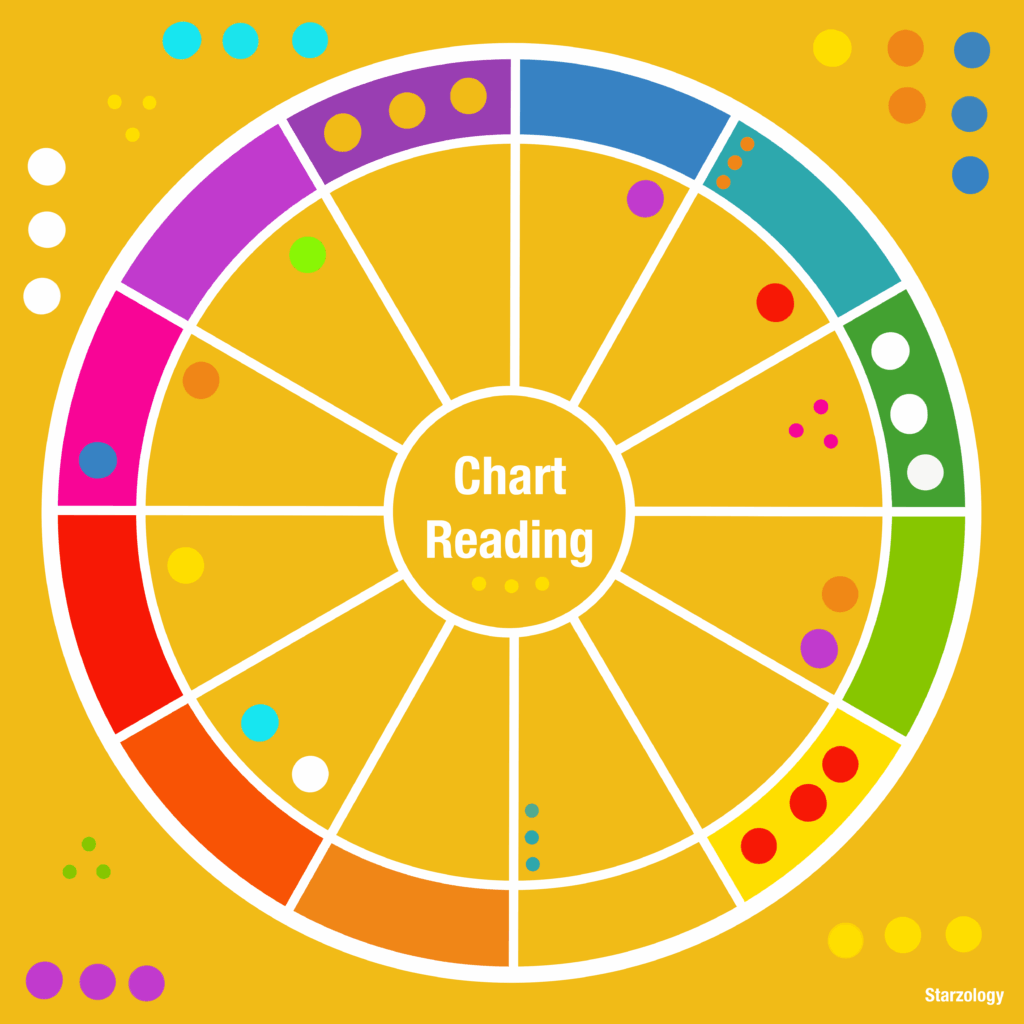
A birth, or natal, chart is a snapshot of the sky at a specific moment, usually the moment of birth.
From this diagram, experienced astrologers can interpret how different areas of your life are likely to be emphasized and how cosmic energy cycles will unfold over time for you.
Beginner’s Resource
If you are just beginning, my Beginners’ Astrology guide offers a simple entry point without overwhelm.
The Four Cornerstones of Astrology
Chart Foundations
All astrological interpretation is built on four core components known as the cornerstones of chart reading.
When you can get an appreciation and understand these factors, it removes much of the confusion which surrounds astrology chart reading.
Let’s take a closer look at the four cornerstones of astrology.

The Signs
How Energy is Expressed
Signs are archetypal styles of expression. They describe how planetary energy manifests, not rigid personality traits.
They are like the role being played out by the planets. Two people with the same Sun sign may express that energy very differently as it depends on the rest of their chart.
The Planets
What Is Happening
The planets represent functions of consciousness and areas of experience.
- The Sun relates to your identity, heart and direction
- The Moon reflects emotional needs and instincts
- Mercury describes communication and thinking
- Venus indicates love and money
- Mars shows your energy, drive and where you will compete
- Jupiter indicates your growth, luck and optimism
- Saturn shows your mastery, limitations and achievements
- Outer planets (Uranus, Neptune, Pluto) represent longer-term, collective themes
- Chiron indicates your weaknesses, wounds and healing
- Eris shows where you will fight for others if they are worthy
In general, the planets describe what kind of energy is active.
The Houses
Where Life Unfolds
The twelve houses represent areas of lived experience like career, relationships, finances, home and inner life. Houses answer the question of where something will show up in real life. In practical astrology, houses often matter more than signs.
The Aspects
How Energies Interact
The aspects describe the relationships between planets. And whether or not the planets are in cahoots with each other. Some aspects indicate ease and flow, whilst others show tension and challenge. Neither is inherently good or bad as growth often comes through dynamic, challenging aspects.
Cornerstone Resources
Understanding Your Birth Chart
Unique to You
A birth chart is unique to the you. If someone has the same birthday as you their chart will be similar. Only if they were born as]t the same hospital at the saem moment as wyou will your charts be close.
Even twins have different birth charts because one was born first and then perhaps the second twin was born ten minutes later.
Birth Chart Calculations
Your birth chart is calculated using three specific data points:
- Date of birth (example date, December 14th, 1978)
- Time of birth (example time, 2:35pm)
- Place of birth (example place, Vancouver, Canada)
Together, these three key bits of information determine the exact positions of the planets, angles and houses for your birth chart.
Note: A natal chart should always be read as a whole, not as isolated placements.
The Big Three
Holy Trinity
Most astrologers begin with three core components or as I like to call them, the astrological Holy Trinity of birth charts.
Ascendant Sign
Your Ascendant shows how you approach life, your looks, personality and how others first perceive you.
Sun Sign
Your Sun sign indicates your identity, ego, purpose and conscious direction.
Moon Sign
Your Moon placement by sign suggests your emotional needs, instincts, habits and inner life.
Triumvirate
These mighty three parts (the Ascendant, the Sun and the Moon) for the foundation of personal astrology and offer far more insight into your core being than Sun signs alone can.

Life Timing
When It will Unfold
One of astrology’s greatest strengths is timing and forecasting. The birth chart describes your potential and the timing techniques show when different themes are activated.
Transits
Transits track current planetary movements, up there right now, in relation to your birth chart.
Transits reveal periods of growth, pressure, opportunity or reflection.
Solar Arc Directions
Solar arc directions are a more advanced forecasting technique which relies on indirect projection of your birth chart into the future.
Why Some Years Feel Heavier Than Others
For example:
- Jupiter transits bring expansion, learning and opportunity
- Saturn transits often coincide with responsibility, restructuring and maturity
- Eclipses mark forks in the road and transitions
Astrology forecasting doesn’t say what must happen, but rather it describes the type of season you are currently in.
Forecasting Resources
- More on Forecasting
- More on Transits
- More on Solar Arc Directions
- More on Eclipses
Astrology, Career and Purpose
Life Direction
Astrology has long been used to understand job, career, vocation and life direction. Career astrology focuses on how you contribute, build stability and find meaning through work. Key indicators for these topics include:
2nd House
The 2nd house explores your income, values, self-worth and resources.
6th House
The 6th house addresses your daily work, day-to-day activities and service.
10th House
The 10th house and Midheaven refers to your career, reputation and public life.
Vocation
Your vocation is frequently shown by the morning planet and is complex.
When combined with timing techniques, astrology becomes a strategic tool for career planning, business launches and long-term professional development.
Career Resources
- More on Vocation
- More on the Midheaven
- How to find a job with the Sun
- More on the Morning Planet
- Job seeking tips when Mercury is retrograde
- What each Sun sign wants at work

Astrology and Relationships
Relationships are one of the most searched topics in astrology and one of the most misunderstood. Zodiac compatibility alone cannot explain why some connections feel effortless while others are transformative or challenging. Relationship astrology looks at emotional needs, attraction, communication styles and long-term bonding patterns.
Beyond Compatibility
Astrology can reveal:
- Why certain people feel immediately familiar
- Where emotional security is built or challenged
- How commitment and responsibility develop over time
Introduction to Synastry
Synastry compares two birth charts to see how energies interact.
It highlights attraction, emotional resonance, growth areas, and long-term potential.
More on Love and Romance
Articles
Here are some more articles about love, romance and relationships.
- Sun Sign Compatibility
- How to Analyze Romantic Charts Like a Pro
- Working with bi-wheels
- Synastry: Polarity, Element and Mode
- Synastry: Planetary Echoes
- Composite Midpoint Charts
- Davison Relationship Charts
- Synastry and Chart Shape
- The Part of Marriage
- Vindemiatrix
- Synastry: The Nodal Axis
- Partner’s planets in your Houses
- Venus and Mars
- Male and Female Planets
Using Astrology Wisely
Intention
Astrology works best when used with intention and discernment. It is not meant to replace decision-making, logic, or lived experience.
Healthy astrology:
- Encourages personal self-reflection
- Supports your conscious choices
- Respects your free will
Ethical astrology avoids fear-based predictions and focuses instead on empowerment, timing and understanding.
Wise Astrology Resources
How to Continue Learning Astrology
Lifelong Study
Astrology is a lifelong study. You don’t need to master everything at once. If you can find out which level of astrologer, you are now.
Here are some of my ideas on the paths you could take depending where you are at the moment in your astrology knowledge.
Beginner Astrologers
Focus on signs, planets, houses, aspects and the Big Three.
Career-focused Astrologers
Explore the 10th house, Saturn and the Midheaven.
Relationship-focused Astrologers
Study synastry and emotional indicators.
Observation, journaling and real-world application will deepen your understanding far more than memorization.
Lifelong Learning Resources
Overarch
Emerging Patterns
Astrology is not about certainty, but rather it is about context. It helps explain why certain periods in life feel expansive, demanding, introspective or transformative.
Over time, patterns will emerge as clarity grows. You don’t need to believe blindly or know everything to begin your astrology journey.
Astrology meets you where you are and deepens as you do.
Freebies
Explore further through Starzology’s guides and freebies and let astrology become a language you learn to speak fluently in just one season at a time.
Newsletter
Make sure to get my weekly Starzlife newsletter so you don’t miss a thing.

Author Bio
Alison Price: Professional Astrologer
Alison helps you uncover your individual creativity and lead a fulfilling life using your own astrology. She shares her wisdom from the heart with a touch of humor. She offers Consultations for everyone and Coaching for Aspiring Astrologers.
If you’d like to get in touch with Alison, you can reach out to her via email at starzology@gmail.com.
More Articles
If you enjoyed this post, you may like some more astrology related articles from our blog.

Synastry: Polarity and Element Compatibility
In astrology, relationships can be assessed through the strength of the active and passive signs and how they combine.

Vindemiatrix
Astrologically, Vindemiatrix appears in charts where accumulation is a theme. You gather experiences, roles or relationships rather than remaining in one form forever.

The Outer Planets
In astrology, the three outer planets are Uranus “the awakener”, Neptune “the dissolver” and Pluto “the transformer”. They are also known as transpersonal planets.

Nodes Enter Pisces / Virgo
In astrology, when the lunar NODES move into PISCES / Virgo there is an energy shift of significant karmic and spiritual development.

Octile Aspects
In astrology, the OCTILE aspects are the squares, semi-squares and the sesquiquadrates and they relate to the Wheel of the Year.

Medical Astrology
In MEDICAL astrology, each sign is related to some parts of the human body. Starting with Aries at the head, going to Pisces at the feet.