



Author: Alison Price – Updated: June 2026
🧡 Advanced Natal Astrology
This article is part of my Advanced Natal Astrology series, where I explore deeper chart analysis for practicing and aspiring astrologers.
Moiety Aspects
Aspects of Moiety
Medium
Moitié is a French word derived from the Latin medietas, meaning “medium measure”, “mean value” or “half”.
In traditional astrology moiety defines a half-measure of any planet’s orb.
This dimension specifies the distance that any planet’s orb extends on either side of the planet.
Podcast
Moiety Episode
Listen to our podcast episode on the aspects of moiety. I chat with Arwynne and we have some example charts.

Definition
Radius
The Sun’s orb extends 30° on the zodiac (diameter), that is 15° (radius) on either side of the centre of its sphere.
This 15° is the moiety of the Sun’s orb, this is the radius.
Any planet within 15° of a conjunction with the Sun is said to enter its beams (or go under its rays) regardless of the length of its own planetary orb.
More Clarity for the Virgos
Average (Mean)
The average uses all the values being considered.
Example:
Planetary orbs:
- Moon = 12°
- Saturn = 9°
- Average = (12 + 9) ÷ 2 = 10°30′
This is the basis of the moiety technique used by Claude Dariot.
The two planetary orbs are combined and halved to find the mean distance where the two planets’ orbs meet.
Median
The median finds the middle point in a sorted group.
Example:
- Planetary orbs: 3°, 6°, 9°, 12°, 15°
- Median = 9°
This is not normally used for calculating aspects because it does not describe the relationship between two specific planets.
Midpoint
A midpoint is the halfway position between two things.
Example:
- Moon at 10° Taurus and Saturn at 20° Taurus
- The closer midpoint is 15° Taurus.
In astrology, midpoints are often used to find the symbolic meeting place between two planets.
Moiety
Moiety is different because it belongs to one planet at a time.
It is the half-measure of a planet’s own orb.
Example:
- The Sun has a traditional orb of 30°.
- Half of this is: 30° ÷ 2 = 15°
The Sun’s moiety is therefore 15°.
A planet within 15° of the Sun can be considered within the Sun’s influence, even if the other planet’s own orb does not reach back.
Therefore
- Average asks: “What is the combined value?”
- Median asks: “What is the middle value in a group?”
- Midpoint asks: “What is halfway between two points?”
- Moiety asks: “How far does this planet’s influence extend?”
In traditional astrology, moiety is about the size of a planet’s sphere of influence, not simply finding a halfway number.
Planetary Moiety Degrees

Visible and Outer Planets
Visible Planets
Typically. you will only consider the visible planets when using moiety.
If you want to use the outer planets, then the suggested moiety diameter is 4° or 2° radius.
Moiety Diagram
Moiety Diagram
Sun and Mercury
In this diagram the Sun does conjoin Mercury, but Mercury does not conjoin the Sun.
The Sun sees Mercury, but Mercury does not see the Sun.
The same approach is applied to other planets with their varying orbs.

Moiety Aspect Interpretation
Fine Tune
Moiety is a way to fine tune your astrology readings.
The planet with the greater orb of moiety will always aspect the lesser planet if the lesser planet is not in orb.
The planet with the greater orb will always influence, or bring pressure to, the planet with the smaller orb unless they are both in orb of each other.
Alternative Method the “Moiety Technique”
Claude Dariot
French astrologer Claude Dariot took a different approach.
Hos theory is that the two planetary orbs were added together and then halved to find a mean measure at which both were in aspectual contact with each other.
In the “Moiety Technique” moiety refers to the mean value obtained when two planetary orbs are added together and then halved to find the distance at which their rays unite.
Example: Moon and Saturn
For the Moon and Saturn this would be 10°30′ (12° for the Moon, plus 9° for Saturn = 21°/2 = 10°30′).
This is widely referred to as the “moiety technique” for calculating when the aspect between two planets begins to become effective.
The moiety technique is derived from the fact that the two planet’s orbs are added together and then halved to obtain a mean or average value that applies to both.
Extend Yourself
Natal Moiety
Using your natal chart, and only considering the Ptolemaic aspects using the Starzology standard aspect set of 8° for conjunctions, oppositions, trines and squares and 4° for sextiles, please do the following:
- List all the aspects in order of orb from tightest to widest.
- Find and list all aspect combinations where moiety comes into play.
- Choose one aspect with moiety, and state which planet sees the other planet and which planet does not.
Extend Yourself Further
Interpretations
- Discuss the meaning of the one-sidedness of an aspect with moiety.

Pin this to read later
Personally
Pernickety
Personally, I do not use moiety aspects in my astrology practice as I find them rather fiddly and not particularly helpful for the type of chart work I do.
Awareness is Key
That said, I believe there is a difference between not knowing a technique exists and making a conscious decision not to use it.
As astrologers, it is valuable to understand the various tools available, even if we ultimately decide they are not for us.
I do Me
There are several other astrological techniques that I choose not to use regularly, such as the asteroids and Anticia.
It is not that I dismiss them.
Rather, I have explored them and decided they do not form part of my personal approach to chart interpretation.
You Do You
Your astrology practice is your own, and you will naturally develop preferences over time.
My suggestion is that you make informed choices.
Learn about a technique, experiment with it if it interests you, and then decide whether it deserves a place in your astrological toolbox.

Author Bio
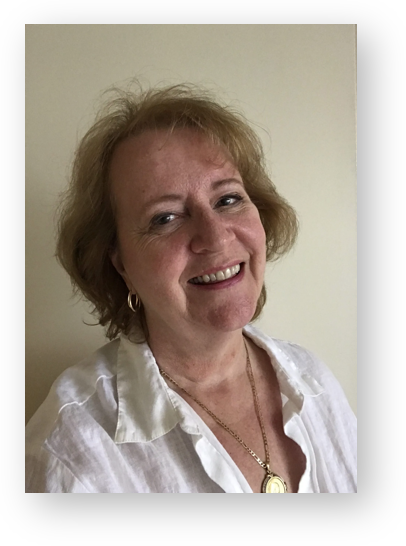
Alison Price: Professional Astrologer
Alison helps you uncover your individual creativity and lead a fulfilling life using your own astrology. She shares her wisdom from the heart with a touch of humor. She offers Consultations for everyone and Coaching for Aspiring Astrologers.
If you’d like to get in touch with Alison, you can reach out to her via email at starzology@gmail.com.
More Articles
If you enjoyed this post, you may like some more astrology related articles from our blog.

The Yod: Major Aspect Pattern
A Yod is an astrological planetary configuration also know as a major aspect pattern which is formed when three planets line-up in a particular way.
A yod looks like a triangle. See image.
This week the three planets in the current yod are Jupiter in Gemini, Saturn in Scorpio and Pluto in Capricorn.
You can also refer to this current pattern as a Jupiter Yod because Jupiter is the focal planet.

How to Cast a Chart without a Birth Time
In astrology, you can cast a birth chart without a birth time. You do have to make some adjustments but it can be done.

Fibonacci Aspects
The Fibonacci aspects are a descrete set of aspects in astrology which follow the Fibonacci sequence of numbers.

10th House
In astrology, the TENTH HOUSE including the Midheaven indicate your career and public life. Planets here modify this area of your life.

2025 Astrology Events
In the astrology of 2025 there are several planetary events that are more important than others. Here is a list of transits for the year.

Pluto Transits Change Lives
Author: Alison Price - Published: November 2024 Pluto Transits Change Lives Often astrology jogs along with not much happening. Moons come and go, the Sun trots thorough the signs in a predictable manner and Mercury and Venus follow suit. But now and then big...